
Queen of Chess – Review

After a smashing hit of The Queen’s Gambit miniseries by Netflix, it was only fitting that the next big thing produced on chess is about the actual Queen of Chess – Judit Polgar. She is the greatest female chess player of time and the documentary Queen of Chess portrays it beautifully.
The one who broke every glass ceiling

Queen of Chess is available now on Netflix | Photo: IMDB
The 90+ minutes documentary was released on Netflix on Friday 6th February. It was indubitably my top priority to watch it as soon as possible. Thankfully, I managed to do that.
Intro: The documentary starts with Garry Kasparov. Then a few lines by the World Champion himself, “Chess is psychological warfare. It’s my will against your will. It’s the toughest kind of competition in its purest form.” The quote was punctuated by a few quotes by the Kasparov from the yesteryear. The documentary quickly established who Kasparov is, to those who do not know much about him.
Then comes, the one and only Judit Polgar. Her first words in the documentary, “In the beginning everyone underestimated me.” Her accolades are mentioned next – like she was the best player in her age group irrespective of gender, She became the youngest International Master back then, three years earlier than Bobby Fischer and Garry Kasparov.
Dirk Jan Ten Geuzendam, Editor in Chief, New in Chess, narrates that in 1994, Judit was going to face Kasparov for the first time in her life. It was the first time in chess history that the number one woman in chess history was going to face the number one player in the world.
This was the first two minutes intro to the documentary. It is undoubtedly going to hook every chess player, enthusiast, fans and also non chess-players, sports lovers and documentary watchers, be interested.
Judit Polgar talks about chess, to establish what the sport is, her dreams as a child, the tough battles she had to face. The documentary talks about the situation Hungary was in back in the 1970s. László Polgár, Judit’s father, talks about her humble beginnings. IM Jovanka Houska, mentions that he has read over 400 books World’s most influential figures to study patterns. IM Anna Rudolf shares that geniuses are made not born, if they are educated in the right way.
GM Maurice Ashley, shared that a lot of people felt like this was almost like a child abuse, that he was doing something that would affect them negatively later in the life. Judit’s father never doubted that this experiment would lead to success. What Judit feels about this experiment, well you have to watch the documentary to find out.
Klara Polgar, Judit’s mother, did not know in the beginning, if his husband was right. She liked her husband and her idea, so she thought why not?
We get to know about Polgar sisters’ beginnings in chess from themselves. They were homeschooled. Judit shared that three trainers came to their home and they had chess classes for ten hours in-a-day.
Judit’s first tournament
Judit played her first tournament in 1981 when she was six-years-old at her neighborhood block. She wanted to win the magnetic chess set which was the first prize. She won the tournament and received the prize that she wanted. After this, it became obvious that she will become a chess player and nothing else.
Early off the board challenges
Judit’s father wanted his daughters to become the best. Thus, he decided to make them play against strong opponents, men. It was not well received then as it was a male-dominated sport. Women were not allowed to play in the Men’s section. The documentary shows comments by Bobby Fischer and IM William Hartston.
Judit and her sister wanted to change the notion. They wanted to be the best. Travelling outside Hungary was not allowed then. Choosing to be homeschooled, being a girl and playing against men, these were not supported by then government of Hungary. They had to oblige, otherwise either them or their family might have had to pay for it.
Police randomly visited Polgar’s house, threatening them to take into a mental house or jail, or take the children away from the parents.
Generally the Polgar sisters were allowed to play only in Hungary and the Eastern Bloc. Judit wanted new challenges. She played simultaneous exhibition matches and also blindfold. Her goal was to win every game. Her real dream was to enter World Top ten and be one of the best. Well, we all know that she managed to achieve both of her dreams.
Kasparov vs Judit
One of the focal point of the documentary is, Judit’s feud with the World Champion, Garry Kasparov. He was someone Judit was following from a young age. She would watch Kasparov’s games with her sisters and learn a lot. He was the best player in the world at that time. She was copying his style, opening ideas, both were aggressive on the board. She was dreaming to play against him.
Kasparov shares that according to a family legend, he discovered playing chess at the age of five and a half. Baku, Azerbaijan, deep south of the USSR where was born and raised. He watched his parents solve a puzzle from a local newspaper and he was mesmerized by the secrets of the game. It was a passion. Match made in heaven. Soviet chess school was controlling the very top of the chess then.
Susan Polgar World no.1 among Women
Susan Polgar became the World no.1 among Women in 1984. She became the highest rated woman in the world at the age of 15 years. Journalists came to Hungary to interview her and her sisters. They could not understand how a World no.1 was not allowed to leave the Eastern Bloc. The journalists made it known that if the authorities did not stop discrimination against the Polgar sisters and their family, they would start a worldwide fight against Hungary for human rights violation. At some point, the Hungarian government felt that the pressure was becoming too much. Eventually their passports were released and they could travel to the west.
28th Olympiad – Thessaloniki, Greece 1988
The 28th Olympiad took place in Thessaloniki, Greece in 1988. It had over 100 countries taking part. The Hungary team had all three Polgar sisters – Judit, Susan and Sofia. The fourth player was Ildiko Madl who was a WGM then and became an IM in 1992. It was strange for the sisters to play in the Women’s Olympiad and play against only women, but they decided to make an exception. They finally got an opportunity to showcase their skills against the world. A young team of Hungary comprising mostly teenagers ended Soviet Union’s dominant run at the Olympiad who had won the last 10 out of 11 Olympiads. 12-year-old Judit scored an impressive 12.5/13 to clinch an individual Gold too. People were not used to young girls playing chess so well at that time. It was quite unusual at that time. The first game that was shown in the documentary was Susan Polgar’s final round draw against Pia Cramling in the final game of the final round which secured a Gold for Hungary. Both Susan and Pia were IMs back then.
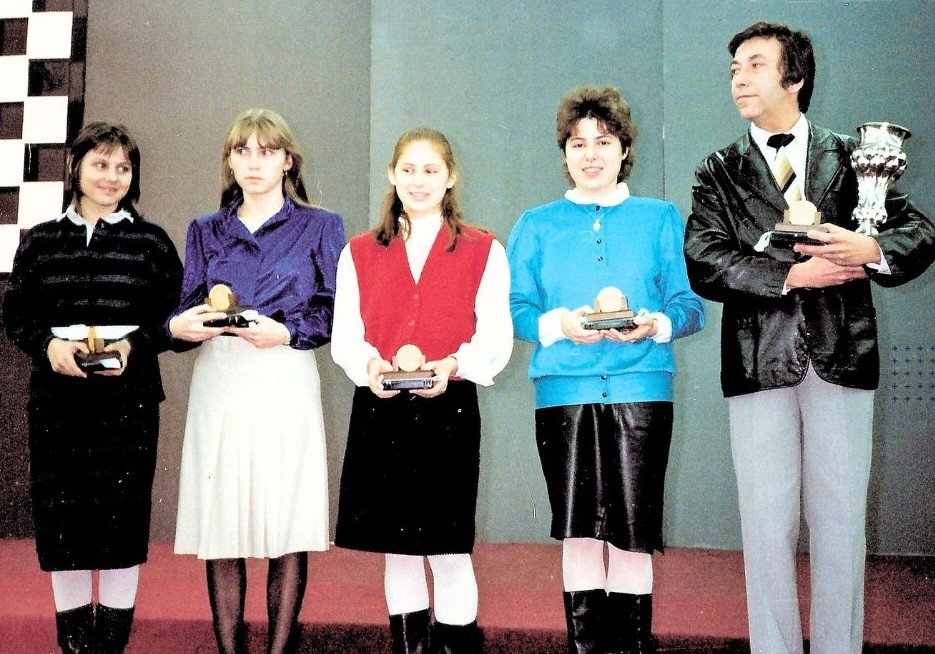
Team Hungary won Gold at 28th FIDE Women’s Olympiad 1988 | Photo: FIDE
Triumphant return
The Polgar sisters deservedly got a great reception after their historic win, ending the USSR’s domination at the Women’s Olympiad. It was a life changing experience for them. Susan mentions in the doumentary – “We left as black sheep and arrived home as the golden girls”. Hungary as a nation acknowledged the Polgar family for the first time. They were invited to the parliament. The President celebrated with them. Government and Hungarian Chess Federation, both changed their tunes.
Political landscape was changing, the Berlin Wall fell, so it became much easier for the Polgar sisters to travel for tournaments. Judit won a bunch of tournaments. There was no sibling rivalry. Everyone believed that the sky is the limit for her.
Meteoric rise
Judit gained 200 Elo rating points in six months. She became the no.1 chess player in the World among the Women at the age of just 12 years. Every month Judit was on the cover on some magazine, everyone was tracking her progress.
Breaking Fischer’s record to become Grandmaster
Judit played Hungarian Super Championship in 1991, at the age of 15 years 4 months. It was her last chance to break Bobby Fischer’s record of becoming a Grandmater at 15 years 6 months. In the final round, Judit just needed a draw against GM Tibor Tolnai to become a Grandmaster and create a World Record. While most players would play safe and take the draw to create history, Judit decided to go for sharp positions by playing tactically. This was the second game shown in this documentary.
Tolnai – Judit, Hungary Super Championship 1991

Position after 20…Nc4
Judit broke the center 19…fxe5 20.fxe5 then she played Nc4! She won the game eventually, won the tournamment, became a Grandmaster at the age of 15 years and 4 months, breaking Bobby Fischer’s record.
Linares 1994
It was Judit’s first elite tournament. It was also the first time in chess history that a girl was playing among the best players in the world including Garry Kasparov. The documentary shows how Judit’s father created training cards and materials for her which contained various positions, opening theories and more.
It was a significant moment in chess history that for the first time the World Champion, Garry Kasparov was facing against the World’s best female player, Judit Polgar, at a tournament. It was not usual at that time that a World Champion and World no.1 among Women were playing at the same event.
Polgar – Kasparov, Game 1, 1994
Judit narrates that Kasparov arrived 30 seconds before the start of the game and all photographers were standings before him with the flash. The third game shown in the documentary was this one as it is definitely quite a significant one, not only in Judit’s career but as a whole in the chess history.
Judit – Kasparov, 12th Linares
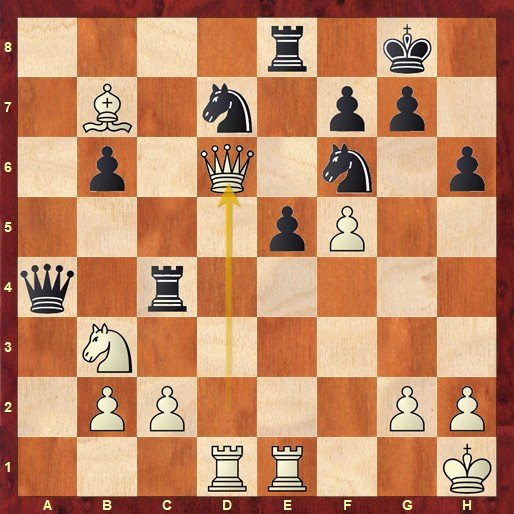
Position after 35.Qxd6
Judit mentioned in the documentary that Kasparov played 35…Nc5 and it was a terrible blunder as 36.Bc6 drops an exchange for Black. Before Black played 35..Nc5, Judit knew that she was going to lose the game but after that blunder, she realized that there is a chance she can draw. After releasing his knight on c5, Kasparov quickly put the knight back on d7 to make a different move. This was a huge shock to Judit. Nobody said anything and she was not sure how to handle this. So she thought, if nobody says anything, then she shouldn’t say anything either. Maybe it’s only from her angle, she could see it. 17-year-old newcomer against the World Champion. Maybe in the future, she will not get invitation if she makes a claim about the touch move incident. She thought that how will she prove it because it’s her words against his. Kasparov played 35…Rxc2 and went on to win the game. Judit was obviously very upset after the game.
The organizer of the event, gave out a press release which mentioned, Mr. Kasparov is an exemplary sportman, tha thas not required of any tricks, to be three years the winner and two years of the World renowned chess tournament.
The unmanned camera which was about 15 meter away from the Judit – Kasparov game, accidentally was left on. It recorded the entire game including the touch-move incident. From the footage it was found and shown in the documentary that Kasparov had left his knight on c5 momentarily before touching it back again. Judit was happy that the video proved what she felt but she also realized that it was not a real consolation for her.
Kasparov on present day opined on the incident – “Yeah there was a little controversy. I believe that I didn’t feel that my hand had actually left the piece. I wouldn’t have done that. It’s about one point. If you look at the video, it’s about one-tenth of a second. I didn’t feel that I made something wrong. Unless you do it in a very very slow motion, you cannot feel. So try to see it as one-tenth of a second whether you feel it or not. It was actually not losing the game, the game would have endede in a draw. Still it would be very unpleasant to miss a win.
This moment basically ruined my tournament because I was under constant pressure for the rest of the tournament by people to remind me.”
Dirk Jan ten Geuzendam, the Editor-in-Chief of New in Chess magazine, shared that, on the final day, Judit walked up to Kasparov in the lobby of the hotel and she said, “How could you do this to me?” Dirk emphasizes on the fact for those who have not met Kasparov in real life, that one may not truly appreciate how brave it was of Judit to approach Kasparov like that and say those words, because he is a force. Judit wanted an explanation by Garry. He got insulted and felt that he got humiliated by her in front of other people. Kasparov was so upset that he did not speak with Judit for three years.
That same year 1994, Judit played fantastic chess in Madrid. Dirk mentions that he won’t forget how the male players reacted to their losses against Judit.There were four games where her opponent did not resign and shake hands after the game.
“I had to prove it like ten times more than if I had been born as a boy.” – Judit Polgar
Polgar – Kasparov, Game 2, 1996
Once again Judit had the white pieces against Kasparov. It was at a strong invitational tournament named Dos Hermanas (In English it means, two sisters) in 1996. This was the fourth game that was shown in a slight detailed way in the documentary.
Judit – Kasparov, Dos Hermanas
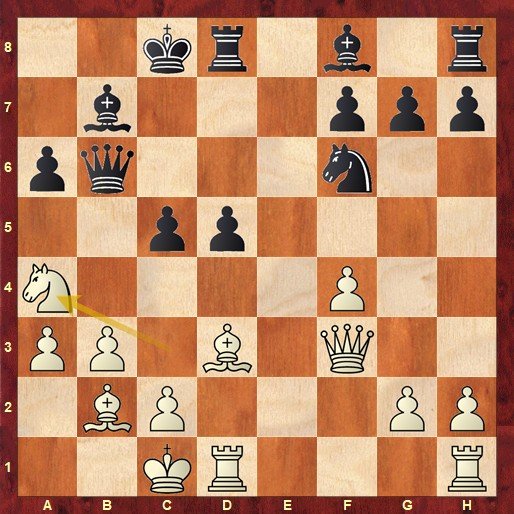
Position after 15.Na4
Judit started playing attacking chess 15.Na4 Qc7 16.Bf5+ Kb8 17.Be5 Bd6 It was a back and forth battle where Kasparov got a winning position but his opponent somehow managed to get back in the game.
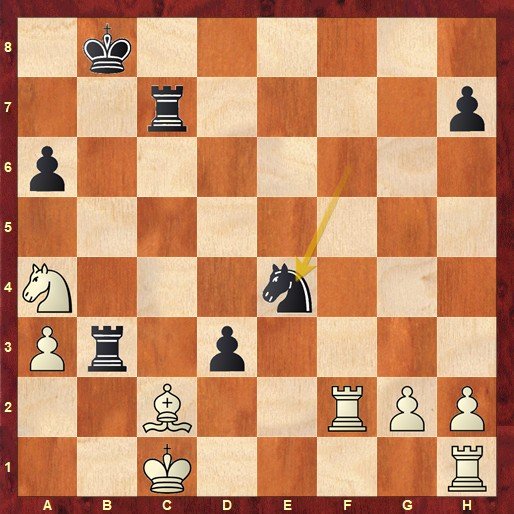
Position after 32…Ne4
White found an unexpected 33.Rf8+! Ka7 34.Rf7! now White is very much back in the game. It was no longer a win for Black. The game eventually liquidated into a rook vs rook and knight endgame after six hours of battle. Despite endgame not being her strong suit back then, Judit kept fighting and eventually she crumbled.
Gusztav Font
When Judit was 23-years-old, she took her family dog to a veterinarian doctor. The examination took quite a long time, Judit admits. Gusztav invited her to play tennis. Judit won a tournament while being in love very much. They got married in the year 2000. The documentary showed moments from their wedding. Judit’s father shared that his role as a manager ended once she got married.
By 2000, Judit was the World no.1 among Women for eleven years. She was also getting close to 2700. Gusztav told her that a draw is better than a loss.
There were games where previously I would make a different decision. I would be fihting and I want to win. And at that point already I said, “Okay, if I don’t have any ideas that I think can work, the draw is also an accepted result.”
Polgar – Kasparov, Game 11, 2001
Judit knew that Kasparov does not like it when his king is under attack. So she decided that no matter what, she would be attacking his king.
Judit – Kasparov, 18th Linares
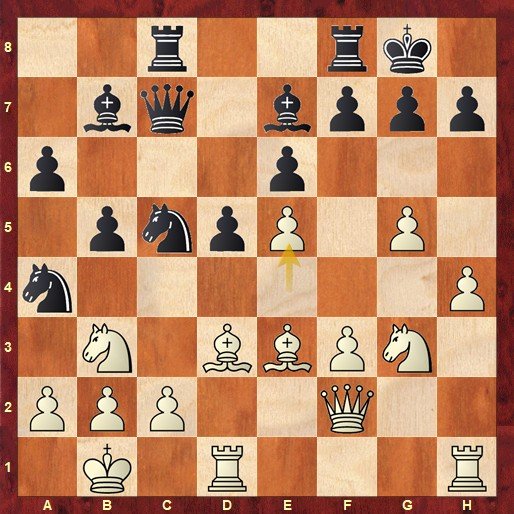
Position after 19.e5
Judit sacrificed a pawn early in the middlegame 19.e5 which his opponent accepted Qxe5.
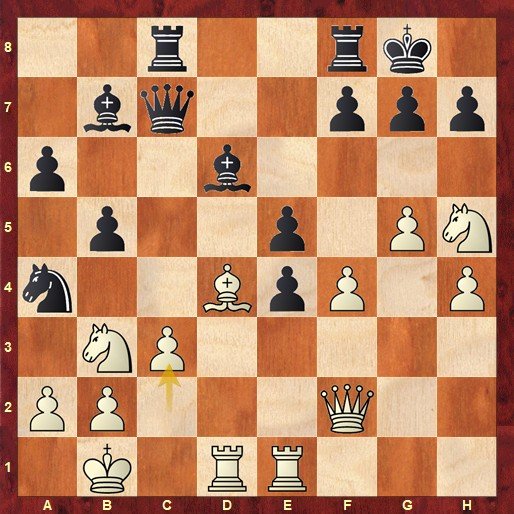
Position after 25.c3
Kasparov attacked Judit’s bishop 24…e5. However, White decided to sacrifice it 25.c3 f6 26.gxf6 exd4 27.Nxd4 f6 White shared that she played 28.f5 without thinking more than three seconds. Kasparov returned the sacrificed material to attack on his opponent’s king. The game eventually ended in a draw via perpetual check.
In 2002, Judit saw Kasparov at a tournament. He asked her if she wanted to visit him for a training session in Croatia. Kasparov shared that the collisions are there between many top players and it was always very respectful between them. She was one of the top players, she could offer some new perspectives. Judit went with his husband, Gusztav, to Kasparov’s villa. The documentary then shows a very human side of Kasparov where he asks all his invitees to take a banana ride with him and his family members. Judit learned a lot from the training sessions.
Polgar – Kasparov, Game 15, 2002
Judit played 1.e4 again. It was not a surprise to anyone as she has been playing this since a very young age. Kasparov shocked her by playing 1…e5 and opting for the Berlin Defence in Ruy Lopez. He wanted to surprise her and take her out of the comfort zone.
Judit – Kasparov, The World vs Russia
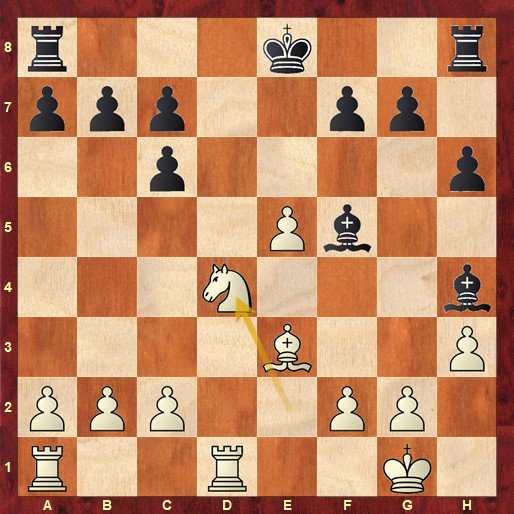
Position after 15.Nd4
Judit started playing her signature style of play starting with 15.Nd4 Bd7 16.g4 Be7 17.Kg2 h5 18.Nf5 and things started become a little bit uncomfortable for Black.
Since I was very young, I was dreaming to win against him. But I never did it. I was sitting there and sitting there, and I told myself, “You don’t go for the draw. You go all the way until the very end.”
Judit was continuously working on her endgame theoretical knowledge. Some patterns that she learned when she was either 8 or 9, was coming back to her. She played the double rook endgame masterfully and won. This was the first time that a female player defeated the strongest chess player and perhaps the greatest chess player of all time.
A year after beating Kasparov, in 2003, Judit broke into World Top 10, the only female player in the history to ever achieve that.
In 2014, when Judit retired from competitive chess, she remained World no.1 among Women since the age of 12, holding position for a record 26 years.
The documentary ends with a tough question which probably many people have it in their mind. What it is and what was Judit’s answer to that question? Well you have to watch the documentary to find out.
Conclusion
I have watched a lot of movies and series, very few documentaries. I think a documentary on Judit and the Polgar sisters’ life and career was the best decision instead of a movie. Because everything real and authentic stuff you can only get to hear from the authentic persons. It is a 2700-level documentary which means it is a top-notch one. It was made for everyone to understand, even those who do not know much about chess.
It should be watched by everyone, especially those who love and appreciate the magnificance of chess. Even if you do not follow chess but follow sports or documentaries, you should definitely watch it and get inspired. It is short and crisp with a runtime of just over 90 minutes.
My only gripe with the documentary could be that music could have been slightly better on some occassion but that’s okay. The music taste is subjective and it did not affect the overall documentary in any way. Go ahead and watch it if you have not yet.
Replay the games shown in detail
Link


Leave a Reply